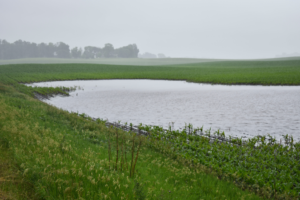
Recent heavy rain fall events and flooding is occurring across several areas in the western half of the Midwest. Earlier this spring, too much moisture led to planting delays – some over a month long – across northern Iowa and southern Minnesota. Many growers are now facing the possibility of a late replanting. The wet conditions are also delaying post-emergence herbicide applications in both corn and soybeans. Current weather conditions and crop stresses also lead to possible heavy disease pressures.
Contributing factors
There are many factors that contribute to a crop’s potential survival in flooded fields. Those include size of the crop, amount of sunlight, air temperature, and length of time the crop was flooded. Corn may survive 1-4 days and soybeans may survive 2-4 days of flooding and saturated soil conditions. Check out these articles for more information to help growers evaluate crops after the flooding has gone.
 Potential for replant
Replanting may not be an option for some of the low-lying areas in fields. The crops around these areas are continuing to grow, which limits access for replanting. Planting corn and soybeans this late in June in the upper Midwest most likely means a yield that is half to two-thirds of normal yields, at best. Having some sort of crop growing in those drowned out spots is good for the soil and weed control. Just make sure that what you are planting can handle any herbicides you may have already applied.
Post-emerge herbicides
Before the heavy rainfall events, some had finished post-emerge corn herbicide applications and others were just getting started, while only a few had started on their post soybean herbicide applications.
Unfortunately, the weeds have continued to grow alongside the crop. Before applying any post-emergence herbicides, growers will have to check weed size to be sure they are applying the correct rate for the size of weeds in each field. Growers also need to be aware of any herbicide rotational restrictions. For example, Fomesafen, the active ingredient in Flexstar, Rhythm, Reflex, Dawn, and several premixes as well, has a 10-month rotation restriction back to corn. See a more complete herbicide rotation restriction list here.
Diseases
The concern moving forward into the season are diseases in both corn and soybeans. Growers may need to consider a fungicide application to protect the remaining yield potential. In corn, the disease concerns include root and stalk rots, crazy top, gray leaf spot, and northern corn leaf blight, just to name a few. Soybean disease concerns include brown stem rot, brown spot, and white mold. Read more detail about those diseases here:
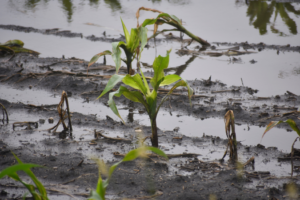 On a positive note, saturated soils are not good for corn rootworm larvae survival. The larvae cannot survive more than 48 hours without oxygen.
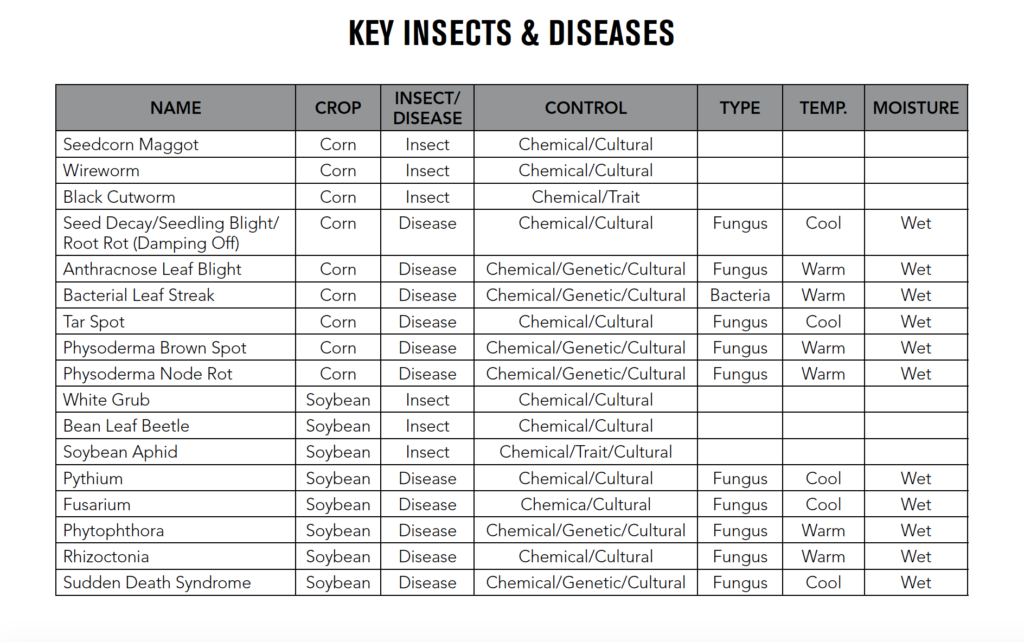
Key insects & diseases
Check out this chart for a quick reference of what insects and diseases fields may be most susceptible to based on the weather conditions in your area.
Contact your local Sales Agronomist if you have remaining questions regarding replanting decisions or flood year diseases.